
July 2026
1
01
July 2026
Designing Hope
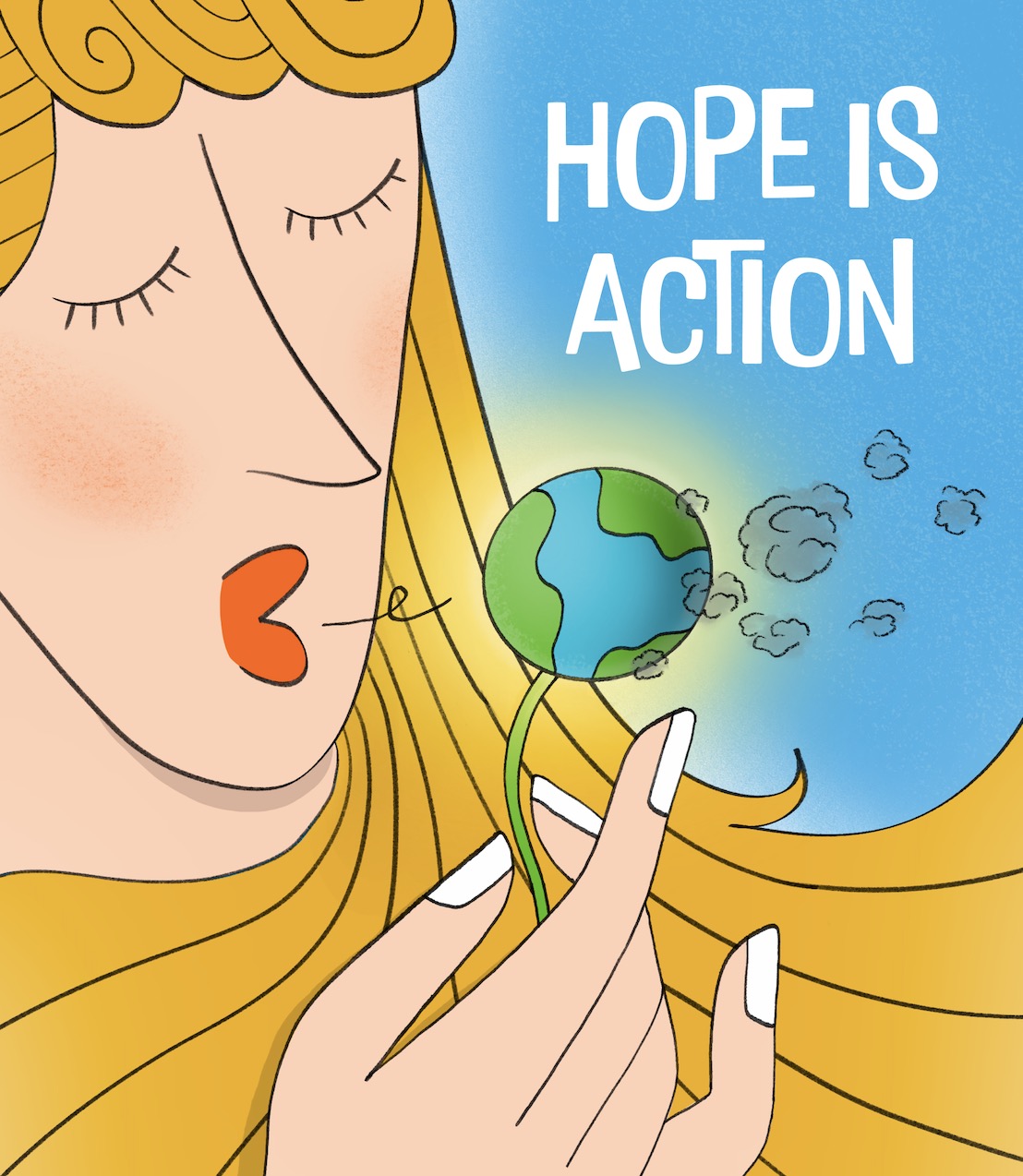
Exploring constructive hope through research, dialogue, and co-creation.
On 1 July, the Beyond Lab welcomed the 2026 International Summer School in Affective Sciences (ISSAS) to the Palais des Nations for a co-creative session on the Hope Project.
.jpeg)
In 2023, the Beyond Lab asked whether emotions might be a missing link in long-term sustainability. That conversation ended on a specific note: Lab Director Özge Aydoğan closed by saying the Lab would start building constructive hope into its work.
Three years later, that intention has become a research project.
The reasoning behind it is fairly simple, and a little uncomfortable. There's no shortage of evidence about the challenges facing our future — scientific knowledge has never been more extensive, the models never more sophisticated, public awareness never higher. And yet knowledge alone rarely changes behaviour. If information were enough, the sustainable transition would already be well underway.
So maybe the question we've been overlooking isn't what people know, but what actually enables them to act. And increasingly, that points towards emotion — not as the opposite of reason, but as one of the things that shapes how people picture the future and decide whether to take part in changing it. Among these emotions, hope sits in a curious spot. Almost everyone agrees it matters. Far fewer agree on what it actually is.
That was the starting point for the session the Lab hosted on 1 July 2026, welcoming the International Summer School in Affective Sciences — organised by the Swiss Center for Affective Sciences at the University of Geneva — to the UN.
.jpeg)
Instead of debating what hope is, the Lab put a more practical challenge to the room: if hope matters for long-term sustainability, how might we deliberately create it? And, more provocatively — how would we even know whether it's there?
The Lab shared its own approach first. Constructive hope, in this framing, isn't optimism and isn't denial. It's a future-oriented belief that things could genuinely get better, held together with a sense of agency — that what I do, and what we do together, still counts. Our approach draws on established work in psychology — on hope, agency, and collective efficacy. The session presented a pilot study putting this to the test in student negotiations, along with a purpose-built measurement tool, the Constructive Hope Scale — framed honestly as an early but promising step, not a finished result.
Then the Lab handed the questions over. Working in small groups, researchers from different disciplines worked through ideas, pushed back on assumptions, and built on one another's thinking. What came out wasn't a single definition of hope, but a set of different ways into it.
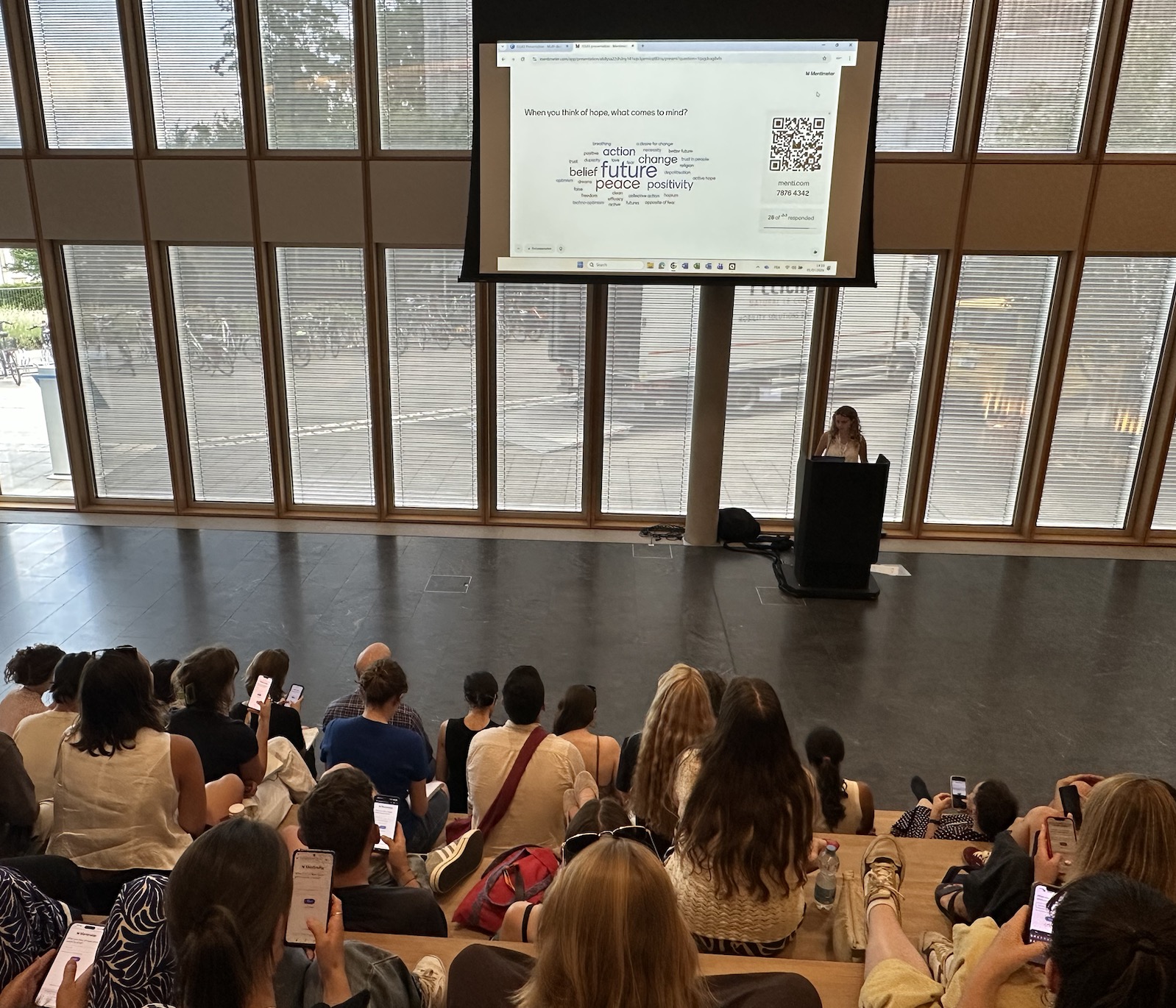
One theme came up in nearly every group: hope rarely appears on its own. It grows through experiences, relationships, and the stories people encounter.
Participants kept returning to communication, creative participation and shared experience as ways of making hope tangible — success stories, working with artists to picture what the future could actually look like, community engagement, and a real diversity of voices. Not because any of that makes hard realities disappear, but because it helps people see that change is still possible. Interestingly, several groups tied this back to collective efficacy: sharing different perspectives and strengths within a group as a way of making people believe that, together, they can actually move something. Hope, in this sense, is less about optimism than about agency — the belief that one's actions still matter.
Another conversation moved from emotion to evidence. Instead of only asking people whether they feel hopeful, several groups suggested looking at what hope might actually do. Would a hope intervention lead to real changes in behaviour — a donation to an environmental cause, more effort put in, staying engaged when things get uncertain?
One idea we found compelling: one group wondered whether an open, reflective format — a "letter to future generations" — might capture pathways thinking, the sense that there are real, concrete steps forward.
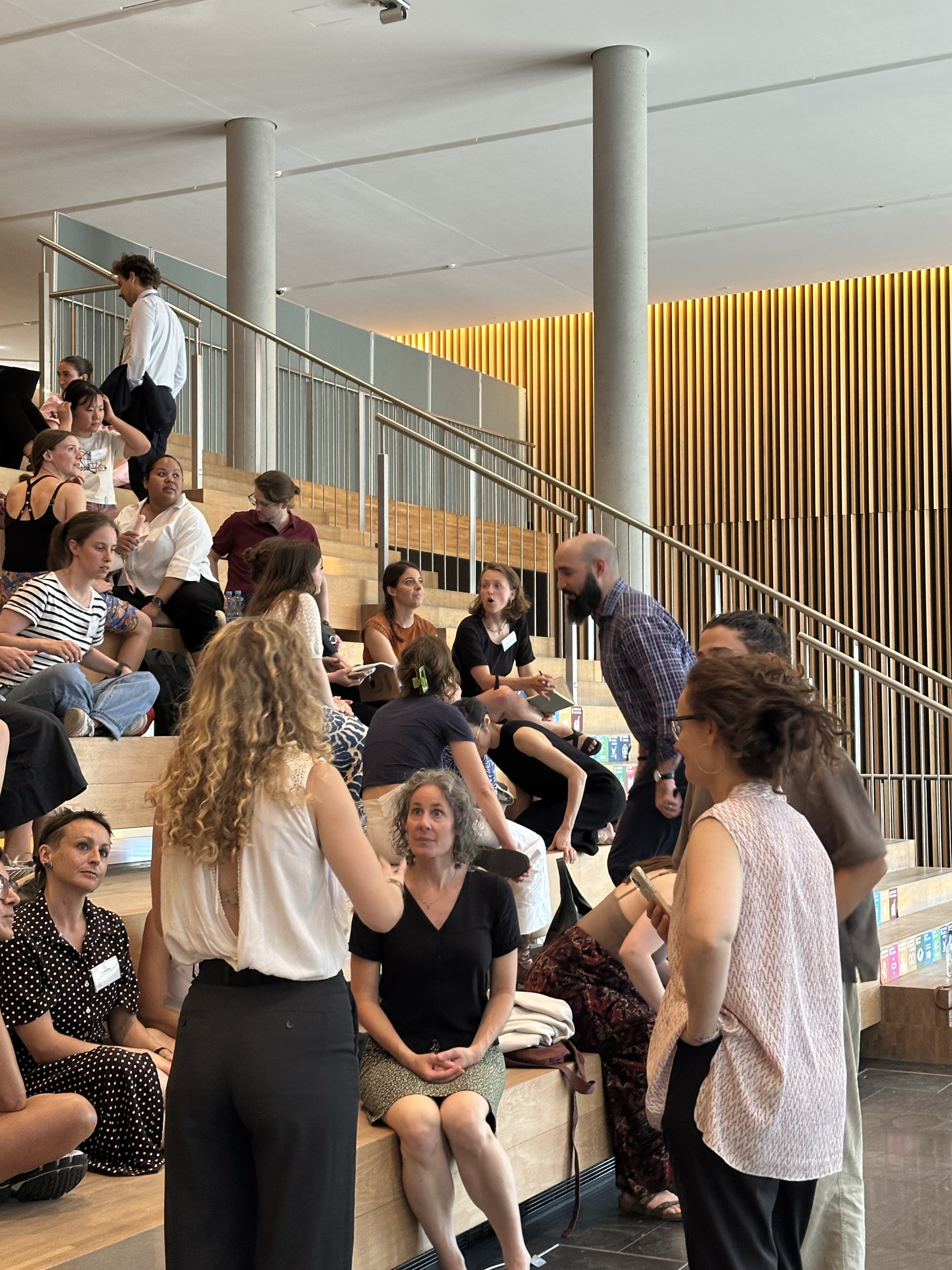
But the sharpest contribution was a challenge to the work itself. One group pushed on the construct directly: is the scale really measuring constructive hope, or is it picking up something adjacent — people's ability to find common ground and collaborate? And what's the underlying theory of change: hope, then what? It's exactly the kind of question you want from a room like this, and it's one the project is carrying forward.
A third thread turned to narrative. Today's stories about the future, participants argued, often leave little room for people to see themselves in them. Some fixate on crisis; others promise technological fixes that make individual action feel beside the point. Neither really invites anyone in.
What the room called for instead were narratives that are more diverse and culturally inclusive, and that position people as actors in the change rather than spectators of it. A few points came up more than once: that hopeful narratives should connect to people's values, not just prescribe actions; that they land better when they're a little implicit about climate, so more people can recognise themselves in the message; and that humour and a shared sense of identity go a long way. Importantly, no one was arguing for relentless positivity. The stronger case was for a hope that sits alongside difficult emotions — grief, anger, anxiety — rather than papering over them. One group even raised whether a degree of fear might be a necessary precursor to hope, not its opposite.
The workshop didn't shy away from method. If hope is going to earn a place in sustainability research, participants argued, it can't rest on intuition. They pointed to the need for more representative samples — reaching well beyond the WEIRD populations that dominate behavioural research — and for stronger validation before the tool travels any further. Understanding hope, as one discussion put it, means being clear about whose hope is being measured, and whose is missing.
From there the ideas opened right up. What if you segmented people by their role in climate mitigation — activists, farmers, policymakers — to see whose constructive hope runs high and whose doesn't? What if constructive hope turned out to be a protective factor for climate scientists themselves, against the burnout and vicarious weight of their work? Several groups were drawn to the people most exposed to the crisis: communities facing displacement, and children and adolescents, who carry some of the heaviest climate anxiety and might have the most to gain from feeling a little more agency.
For decades, sustainability has grown ever better at measuring the external world — emissions, resource use, economic growth, ecosystem health. Those indicators still matter. But they describe the systems around us.
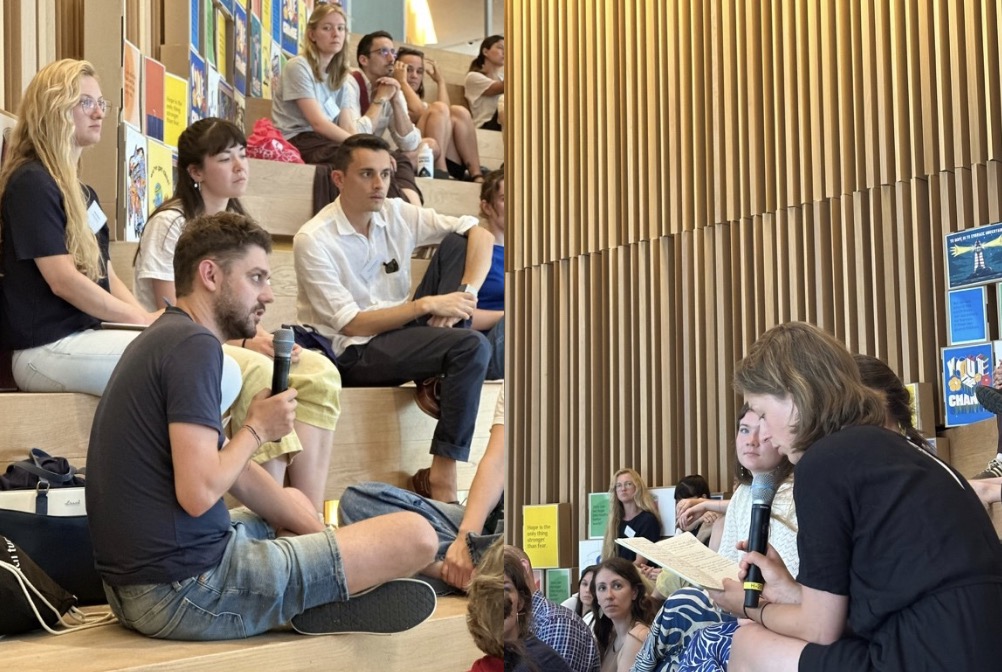
The session raised a different possibility: that understanding sustainable transitions might also mean measuring the human conditions that make them possible. Not because emotions replace evidence, but because evidence on its own so rarely changes behaviour.
Maybe the future of sustainability depends not only on better models of the planet, but on better models of ourselves. Hope may never be something we can fully pin down. But if it shapes whether people choose to act, collaborate, and imagine different futures, it might be one of the more important questions sustainability has to answer.
This exchange feeds directly into the next phase of the Hope Project — and into what the Lab calls the Hope Method: an effort to turn research like this into practical, evidence-based tools. It's being developed in close collaboration with the Swiss Center for Affective Sciences, and increasingly with the University of Oxford. The work continues.
Art Work Credit: Betül İpek, Fine Acts
