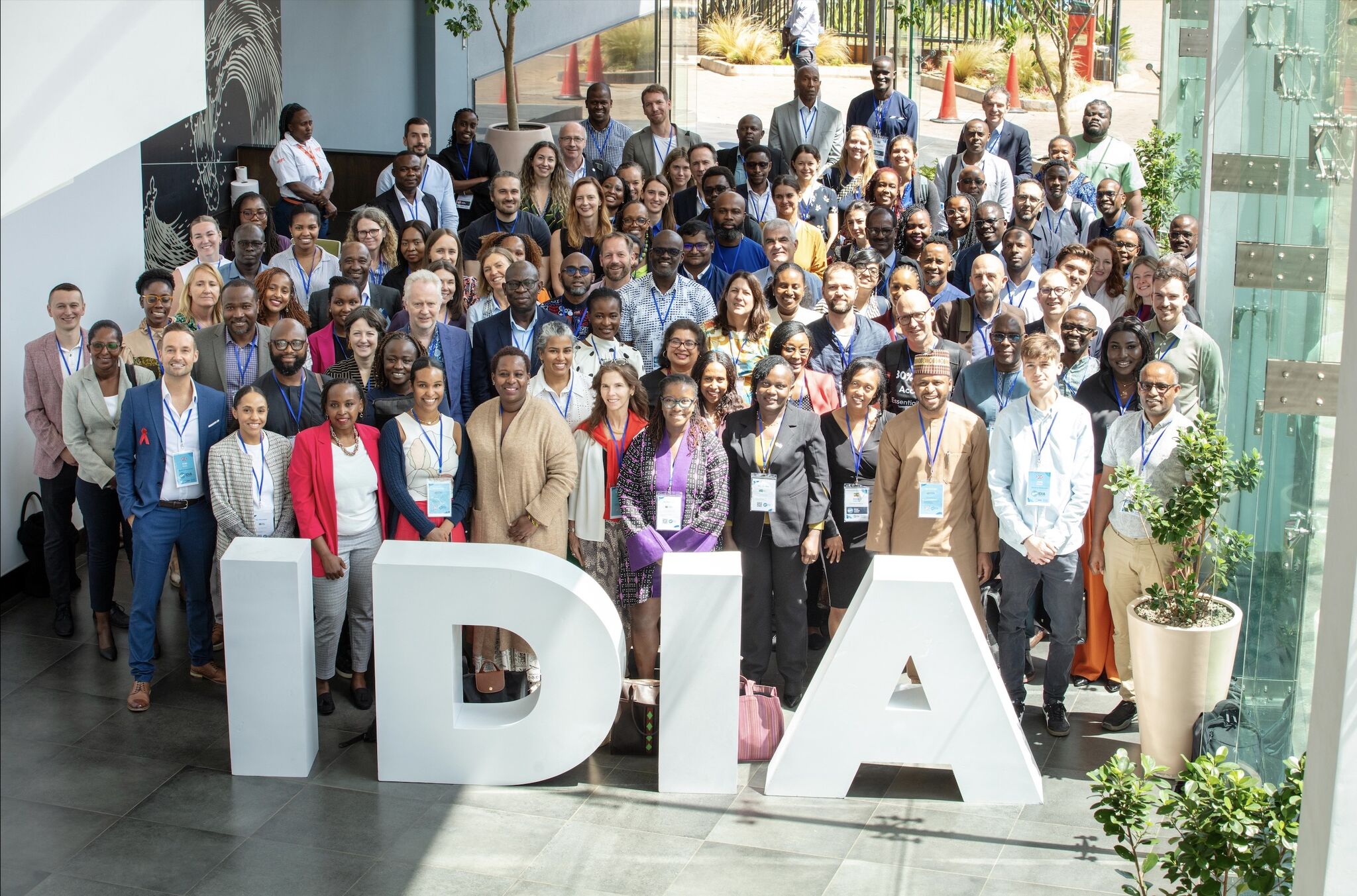
December 2025
8
08
December 2025
At the IDIA Global Summit (1-3 December), the Beyond Lab led a future-oriented workshop inviting participants to reimagine sustainable livelihoods through a regenerative lens, co-creating principles and leverage points for equitable, resilient, and wellbeing-centered systems.
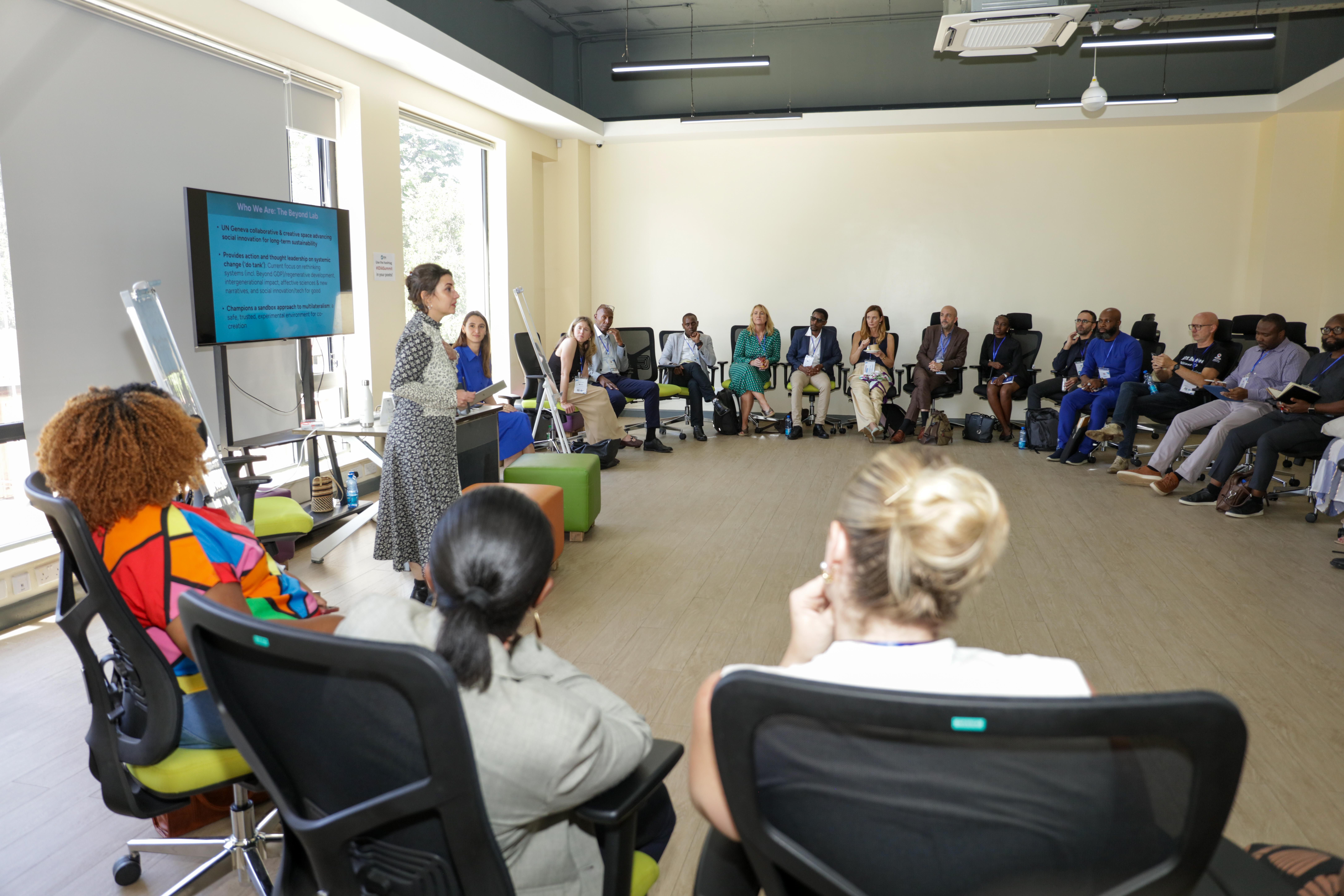
At the International Development Innovation Alliance (IDIA) Global Summit in Nairobi, Kenya, the Beyond Lab convened the “Reimagining Our Future: Sustainable Livelihoods” workshop to support a systemic shift from extractive development models toward regenerative ones. The session was designed not only to refine existing livelihood approaches, but to rethink the foundations on which they are built. By situating livelihoods within living social, ecological, and economic systems, the workshop created space to explore how long-term wellbeing and shared prosperity can be intentionally designed.
The workshop brought together diverse Summit participants to co-create the strategic foundations of IDIA’s Collective Impact Track on Sustainable Livelihoods. Regenerative development was positioned as a unifying framework that challenges dominant assumptions about value, growth, and success, and opens new possibilities for how livelihoods contribute to resilience, dignity, and intergenerational equity.
Facilitated by Özge Aydogan and Nathalie Delorme, a central premise of the session was that sustainable livelihoods cannot emerge from systems designed around extraction, short-term optimization, and fragmentation. Participants explored regeneration as a shift in logic, one that understands development as relational and inherently interconnected. Within this framing, livelihoods are not isolated economic activities, but expressions of how societies organize care, production, and stewardship over time.
Wellbeing and co-being were integrated as core dimensions of regenerative livelihoods. Rather than being treated as secondary outcomes, they were understood as indicators of system health, reflecting the quality of relationships between individuals, communities, institutions, and ecosystems.
The Beyond Lab employed a future-back design methodology to disrupt linear planning and surface deeper systemic insights. In four working groups, the 40+ participants were invited to imagine themselves as “the people of tomorrow” living in a society that had already completed the transition from extractive to regenerative systems. From this vantage point, they reflected on what meaningful work, resilience, and shared prosperity look like in practice, and what kinds of structural shifts and collaborations had enabled that reality.
This approach made it possible to move beyond incremental problem-solving and to address more fundamental questions of power, incentives, ownership, and values. By designing from a lived future experience, participants were able to identify not only what needs to change, but how alliances like IDIA can act as catalysts for transformation rather than as implementers of isolated solutions.
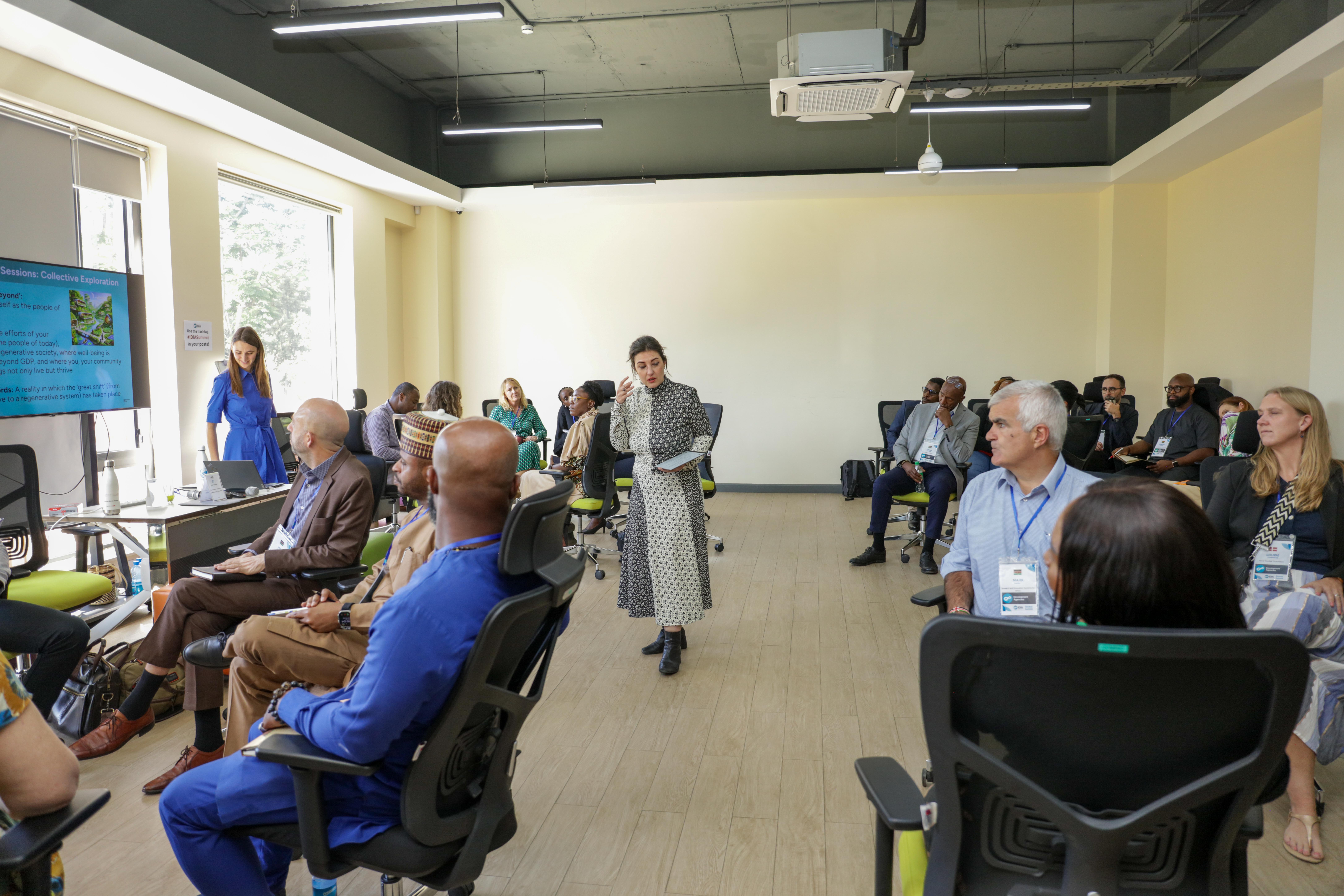
Across the different livelihood dimensions explored, participants consistently pointed to systemic barriers that prevent regenerative systems from emerging. These included deeply embedded extractive mindsets, short-term decision-making, fragmented governance, weak collective action, misaligned values, and unequal access to assets and opportunities. Such barriers were recognized as reinforcing one another, locking systems into patterns that undermine long-term wellbeing.
In contrast, regenerative livelihoods were described through shared structural qualities rather than sector-specific outcomes. Participants articulated futures grounded in social equity, cohesive communities, dignified and valued labor, regenerative food and resource systems, and a renewed social contract that recognizes mutual dependence and intergenerational responsibility.
The collective synthesis converged on a set of guiding principles intended to orient IDIA’s Sustainable Livelihoods Track. These principles reflect a clear move away from transactional development approaches toward values-led and regenerative practice. They emphasize equity and human agency, collective and shared ownership, youth engagement as a driver of innovation, and fairness across generations. Together, they provide a strategic compass for navigating complexity while maintaining coherence and purpose.
Rather than defining prescriptive solutions, participants identified key leverage points where innovation and collective action can enable system-level change. These include reshaping incentive structures so that regenerative outcomes are rewarded, embedding regenerative thinking into education and learning systems, supporting value creation that benefits communities as well as markets, and amplifying voices that are often excluded from shaping development trajectories.
These opportunity areas reflect a shift in focus from delivering projects to influencing the conditions and systems that shape how livelihoods emerge, evolve, and endure.
This workshop demonstrated that regenerative development offers a practical and actionable framework for reimagining livelihoods at scale, provided stakeholders are willing to challenge dominant paradigms and work at the level of systems rather than symptoms.
For the Beyond Lab, the session reaffirmed the importance of creating spaces where future-oriented thinking, relational engagement, and systemic design can converge. Reimagining sustainable livelihoods is ultimately not about predicting what lies ahead, but about intentionally shaping the systems that will support life, dignity, and wellbeing now and for generations to come.