
May 2026
7
07
May 2026
Analysis | From an Intergenerational Scope to Spillover Accountability: How the Youth Network on Beyond GDP Reshaped the Global "Beyond GDP" Framework

The transformative impact of the Youth Network on the Expert Group’s final report: evolving an economic update into a groundbreaking, intergenerational roadmap for global progress.
The global movement to redefine how we measure progress on sustainable development has reached a critical juncture. Central to this shift is the launch of the UN Secretary-General's independent High-Level Expert Group on Beyond GDP’s final report and recommendations in May 2026.
The Expert Group, appointed one year ago, was tasked with developing a framework that adequately reflects the multidimensional nature of sustainable development. Before the final report, the Expert Group released an interim report in November 2025, which was anchored by a human rights rationale and organized around three core pillars: Well-being, Equity and Inclusion, and Sustainability. This interim report proposed a tentative consensus on seven key domains, Material Well-being, Health, Education, Environmental Sustainability, Subjective Well-being, Social Capital, and Governance, designed to initiate global feedback.
The final report, released on 7 May 2026, represents a significant expansion of the initial framework. It adopts three revised guiding principles: Human Rights, Peace, and Respect for the Planet. The structure was refined into three primary categories, Current Well-being, Equity & Inclusion, and Sustainability & Resilience, now encompassing 19 domains and 31 indicators.
Recognizing the importance of both intergenerational perspectives and a sustained, bottom-up approach to reshaping systems, the Beyond Lab, UN Trade and Development (UNCTAD) and Rethinking Economics International formally initiated the “Youth Moving Beyond GDP” initiative back in September 2024, now gathering a Youth Network with over 1,000 participants from over 90 countries. This youth-led advocacy group was established to ensure that the transition reflects intergenerational justice, planetary limits, and the lived realities of different generations and presneted their own policy recommendations on Beyond GDP in November 2025. This was no mere advisory board; it was a collaborative space for young economic thinkers to refine and contribute to the Expert Group’s policy recommendations.
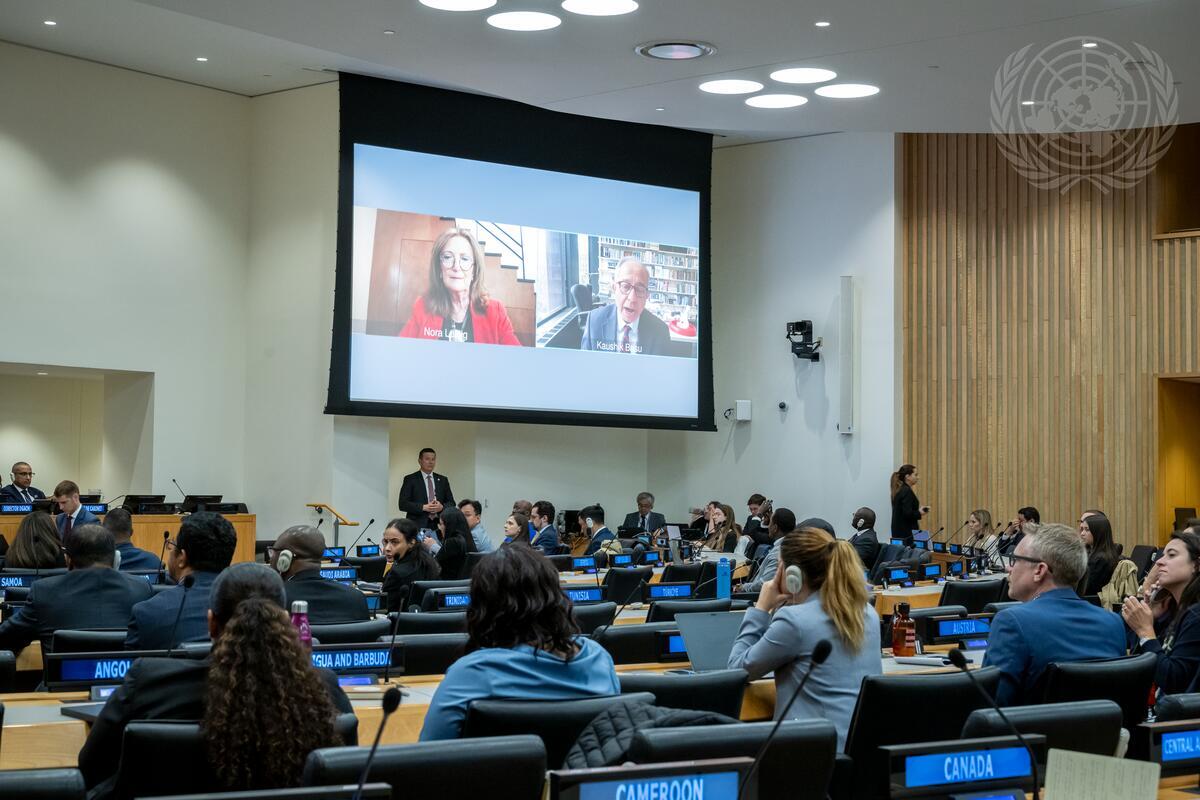
The true measure of this collaboration lies in the text of the Expert Group's final report. Here is how the Youth Network’s policy insights transformed from ambitious proposals into integration in official global recommendations:
1. Elevating "Respect for the Planet"
Initially framed under the broad umbrella of Sustainability, the final report now enshrines Respect for the Planet as one of its three foundational principles. This shift ensures that Planetary Boundaries, a key youth demand, are no longer a secondary concern but a hard limit that dictates all other metrics of progress.
2. Spillover Accountability
One of the most significant "blind spots" identified by the Youth Network was the impact one country has on another. The Expert Group heard the Youth Network's advocacy by calling for Cross-country Spillovers to be implemented alongside the recommendations. This ensures nations are held accountable for their transboundary environmental, economic, and social footprints.
3. Adopting an Intergenerational Scope
While the interim report focused primarily on the "here and now," the final report explicitly adopts an intergenerational scope. By recognizing the framework as multidimensional and forward-looking, the Expert Group ensures that the well-being of future generations is baked into today’s policy decisions.
4. Human Rights as a Foundation
Following the Youth Network’s advocacy for "knowledge justice", the final report moved Human Rights from the background to a foundational principle. This includes specific indicators to track safety, non-discrimination, and the protection of vulnerable groups, ensuring that progress is inclusive by design.
5. Expanding the Resilience Model
The Youth Network pushed for a more granular understanding of resilience. In response, the Expert Group expanded its framework from seven broad areas to 19 specific domains. This reflects the youth-proposed model of resilience that functions at four distinct levels: Individual, Community, National, and Global.
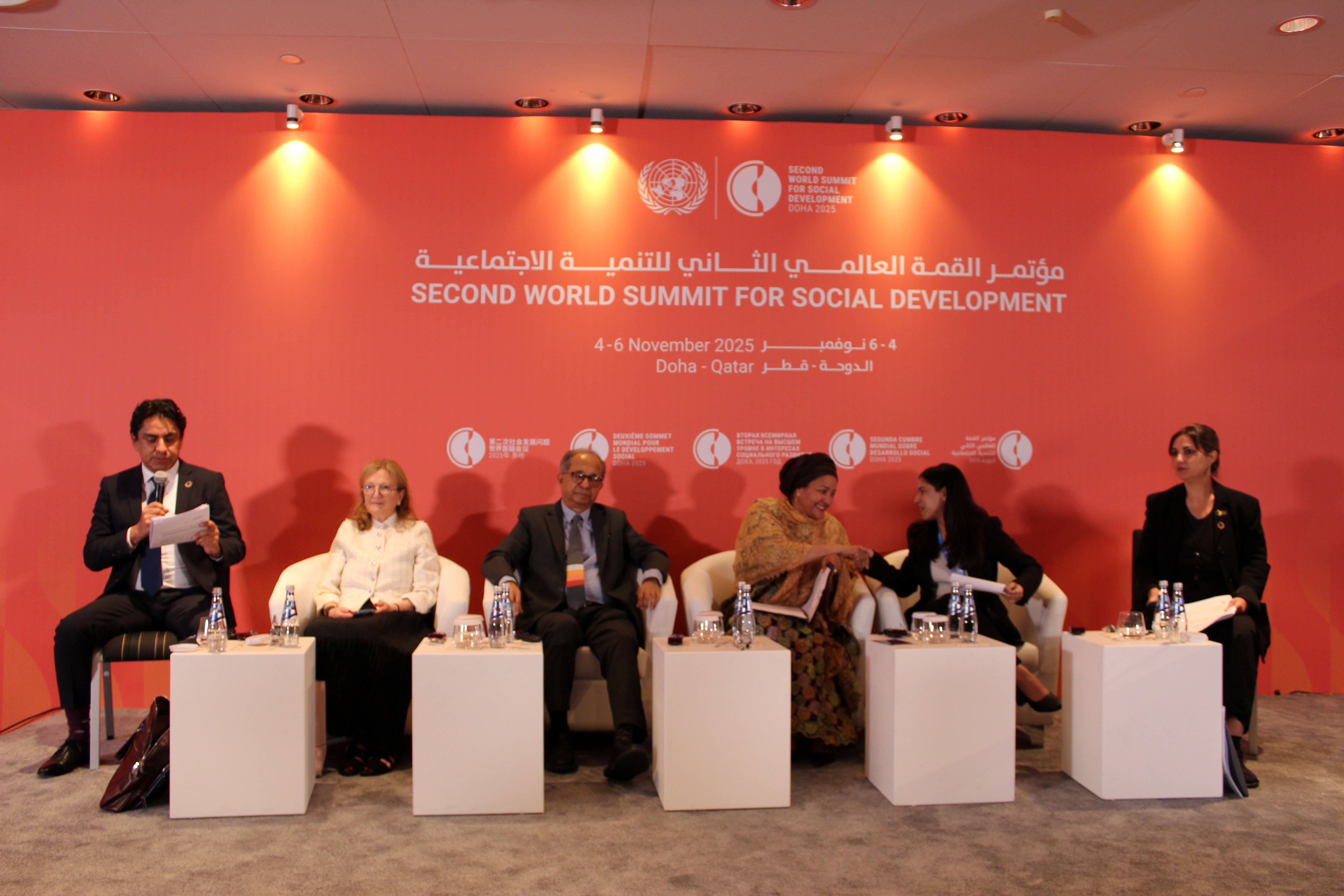
Through a series of strategic dialogues, the Youth Moving Beyond GDP initiative enabled the Youth Network’s inspiring and strong engagement with the Expert Group, in close alignment with the process, to challenge their thinking constructively and call for high ambition and inclusion of different voices. Already at the Expert Group’s First Consultations in July 2025, the Youth Network brought their "knowledge justice" lens to look beyond traditional data and include lived experiences and indigenous wisdom. In October 2025, at the Embedding Human Rights in Metrics of Progress Expert Roundtable in Geneva, a Youth Network representative challenged the experts to ensure that young people were not just subjects of data, but active designers of the new framework. This was followed by participation at UNCTAD 16, where the Youth Network urged to address the "invisible economy". The Youth Network representative argued that by overlooking the informal sector, GDP-centric models ignore the lived realities of millions of young workers globally.
The collaboration reached a crescendo at the World Summit for Social Development in November 2025 in Doha, where the Expert Group published their interim report and a pivotal "intergenerational bridge" was built, as the Youth Network also presented their recommendations that exposed critical gaps in transboundary accountability and long-term scope. This moment marked a shift from consultation to co-creation, as the Youth Network identified gaps in the interim draft, specifically the absence of spillover accountability and a lack of explicit intergenerational scope. The framework of the Youth Network's policy reocmmendations introduced three guiding principles, Human Rights, Intergenerational Justice, and Country-Owned yet Globally Relevant, and identified five critical domains: Participatory & Fair Governance; Equity, Inclusion & Knowledge Justice; Resilient Well-being; Planetary Boundaries & Environmental Justice; and Spillover Accountability.
This momentum was carried into the UNECE Regional Forum on Sustainable Development on 22 April 2026, where a Youth Network representative shared a panel with Expert Group member Prof. Enrico Giovannini to advocate for the formal integration of spillover accountability. By reframing the narrative of a "better future" around the hard limits of planetary boundaries, the Youth Network ensured that the final Expert Group framework would shift from a domestic, short-term focus to a global, intergenerational standard.
Another highlight of our journey with the Expert Group process was at the UN Statistical Commission and High-Level Forum on Official Statistics on 2 March 2026, where Expert Group member Martine Durand further recognized the importance of the points raised by the Youth Network.
This importance was not only reflected in interactions and high-level gatherings but was formally put to paper within the final report. This report not only includes an overwhelming majority of our Youth Network recommendations, but also formally recognizes the Beyond Lab as a central partner within their consultative process.
The transition from a standard economic report to a multidimensional, future-proof framework is a testament to what is possible when institutional expertise meets youth-led advocacy. The process of the Expert Gorup has set a new global precedent: we have a responsibility for our current and future systems to finally co-design with those who will inherit it.
We extend our deepest gratitude to the members of the Youth Network and our partners from UNCTAD and Rethinking Economics International for their tireless energy and their refusal to settle for the status quo. We also thank the Expert Group for their openness to dialogue and their commitment to transforming these bold recommendations into a rigorous policy reality.
As we move toward the intergovernmental process, the momentum is clear. We aren't just moving beyond GDP; we are moving toward a world that finally counts what truly matters.
